


OSHA’s Respirable Crystalline Silica standard for construction (29 CFR 1926.1153) has been enforced since September 2017. It sets a permissible exposure limit of 50 micrograms of respirable silica per cubic meter of air, averaged over an 8-hour shift, with an action level of 25 µg/m³. Cutting, grinding, drilling and sanding concrete, block, brick, stone and mortar can all release respirable silica dust well above that limit.
The simplest path: Table 1
Employers can either measure each worker’s exposure, or follow the engineering controls listed for each task in Table 1 of the standard. For many dry tasks, such as hand-held grinding, Table 1 calls for a tool fitted with a shroud and a commercially available dust collection system that:
- provides 25 CFM or more of airflow per inch of wheel diameter (for hand-held grinders),
- has a filter that is 99% or more efficient, and
- has a cyclonic pre-separator or a filter-cleaning mechanism.
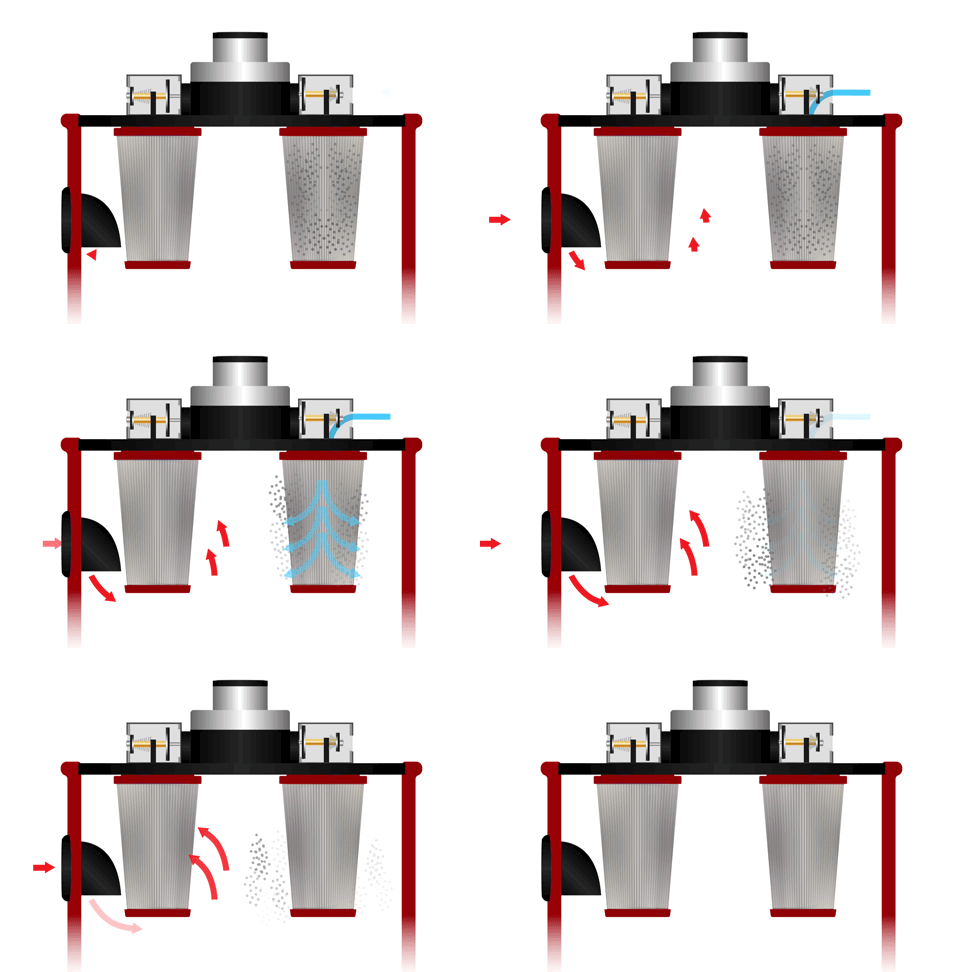
That last point is where most shop vacs fall short. As the filter loads with fine dust, airflow drops, and so does protection. Pulse-Bac’s patented Automatic Pulse-Clean Technology™ cleans the filter while you work, so airflow stays consistent from the first cut to the last.
What else the rule requires
Dust collection is one part of compliance. The standard also requires a written exposure control plan, a designated competent person, housekeeping methods that don’t create airborne dust (no dry sweeping or compressed air), respirators where Table 1 calls for them, and medical exams for workers who must wear a respirator 30 or more days a year.
This page is a summary, not legal advice. See the full text of 29 CFR 1926.1153 and Table 1 at osha.gov, and confirm your exposure control plan with your safety professional.


